
Reduced Technology Risk
Critical work is less dependent on obsolete platforms and scarce knowledge.

Modernising ageing systems without unnecessarily stopping business operations.
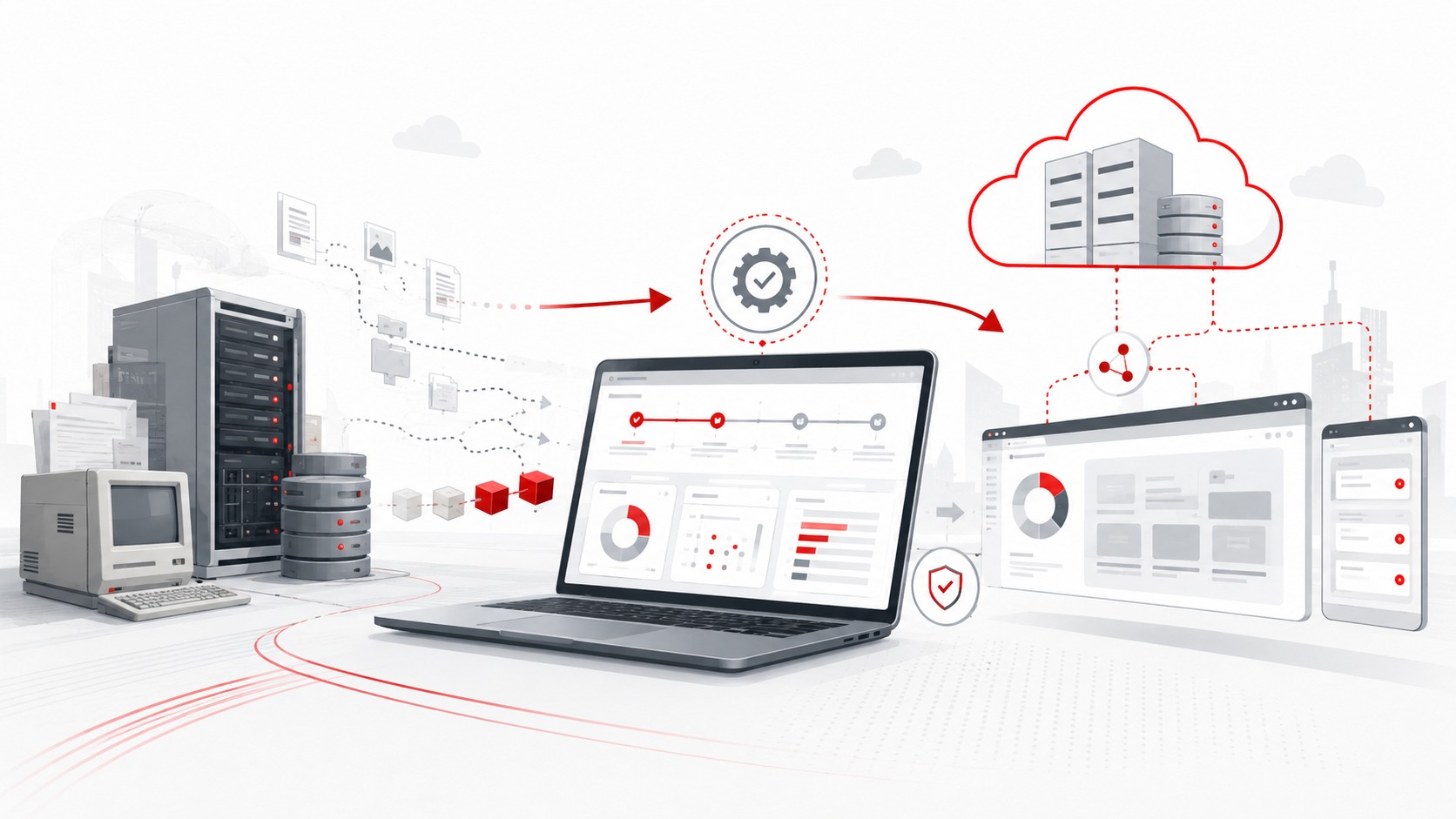
Older systems contained undocumented business rules and still needed to exchange data with ERP and warehouse platforms.
Clarify hidden specifications, plan staged replacement and build EDI interfaces around the existing environment.
Current-state assessment, dependency mapping, data migration, interface testing, cutover and rollback planning.
Recovered critical business knowledge, enabled an effective migration and connected external systems without forcing major changes to existing specifications.
This case study is a non-confidential summary of project experience. Customer names, system architecture and exact performance data are not disclosed.
Long-running systems may contain years of business knowledge but depend on ageing operating systems, unavailable skills or undocumented interfaces. A safe modernisation programme must preserve essential outcomes while removing obsolete complexity in manageable stages.
The sequence below shows a practical delivery pattern. Actual phases and responsibilities depend on the customer environment.
Identify functions, users, data, interfaces, reports and operational timing.
Document business rules, exceptions and undocumented dependencies.
Separate essential outcomes from obsolete or low-value features.
Build and transition in stages with testing, reconciliation and fallback.
Decommission old components only after evidence, retention and support checks.
The value comes from changing how information is captured, checked, shared and acted on - not from technology alone.
Critical work is less dependent on obsolete platforms and scarce knowledge.
Rules and dependencies become available for future support and change.
Existing ERP, warehouse or partner exchanges can continue during transition.
Phased delivery reduces the amount of operational change introduced at one time.